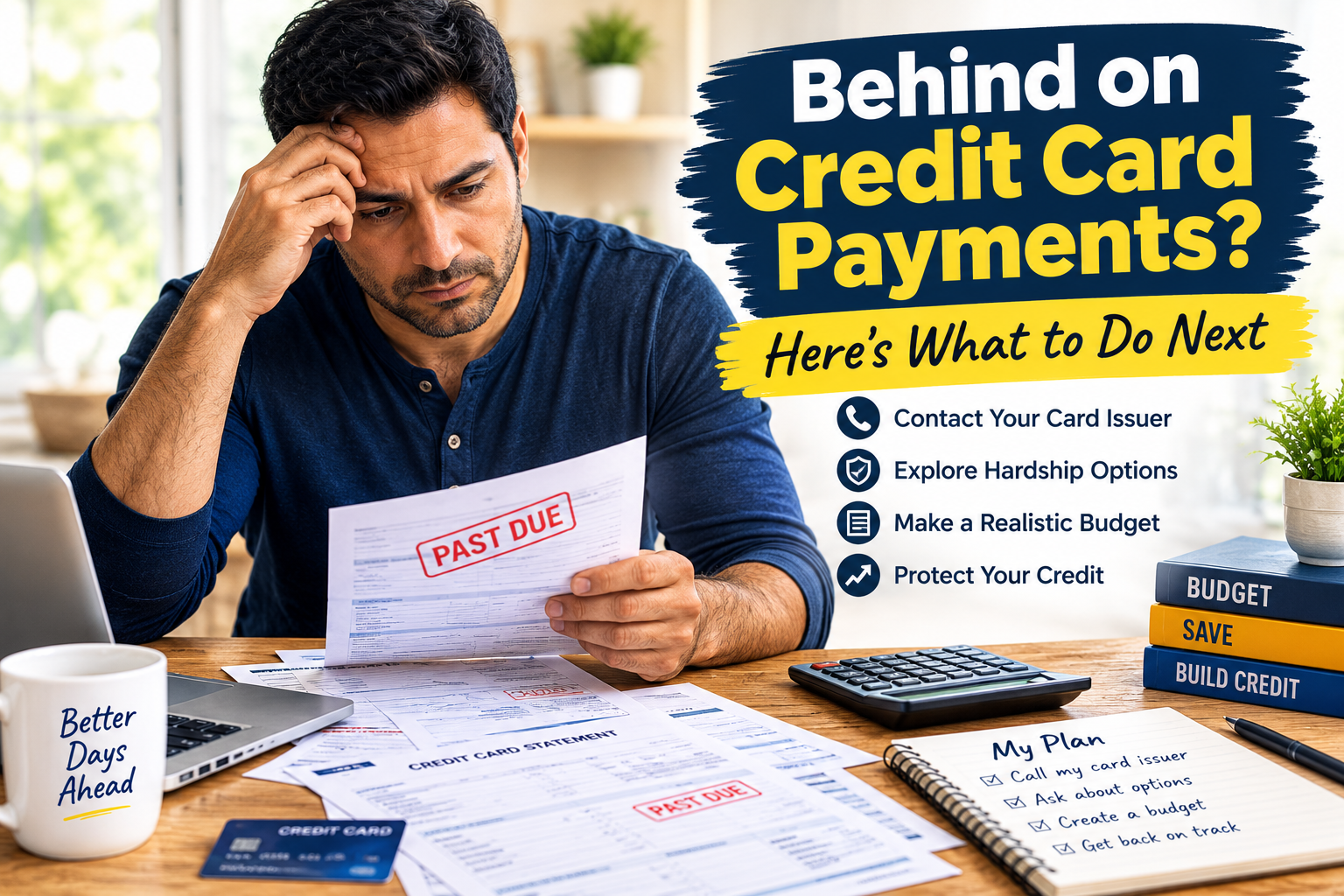
Falling behind on credit card payments can be stressful. Maybe an unexpected expense came up, your income dropped, or your monthly bills have become too much to handle. Whatever the reason, you are not alone, and you still have steps you can take to improve your situation.
The worst thing you can do is ignore the problem and hope it disappears. Missed payments can lead to late fees, additional interest, collection activity, and damage to your credit history. But taking action early may help you understand your options and prevent the situation from getting worse.
In this guide, you’ll learn what to do if you’re behind on credit card payments, how to contact your card issuer, where to look for assistance, and how to start working toward financial stability again.
1. Understand How Far Behind You Are
Before deciding what to do, get a clear picture of your situation.
Log in to each credit card account or review your latest statements. Write down:
- The outstanding balance on each card.
- The minimum payment due.
- The payment due date.
- How many payments you have missed.
- Any late fees or additional interest.
- The amount you can realistically afford to pay.
If you have several credit cards, looking at all the numbers together can help you understand the full picture.
For example, you might discover that one card is only a few days overdue while another has been unpaid for two months. Those situations may require different conversations with your creditors.
Don’t guess at the numbers or avoid opening your statements because you’re worried about what you’ll find. Knowing where you stand is the first step toward making a plan.
2. Contact Your Credit Card Company as Soon as Possible
If you cannot afford your minimum payment, contact your credit card issuer. You do not necessarily have to wait until you’ve missed a payment to ask for help.
Many card issuers may offer assistance to customers experiencing financial hardship, although the options depend on the company, your account, and your circumstances.
Call the customer service number on the back of your card or use the contact information on the issuer’s official website.
Explain your situation honestly. You don’t need a perfect speech. You just need to communicate clearly.
Tell the representative:
- Why you’re having difficulty making payments.
- Whether your financial problem is temporary or ongoing.
- How much you can realistically afford to pay.
- When you think you might be able to resume regular payments.
Then ask what options are available.
You could say:
“I’m experiencing financial difficulties and I’m having trouble keeping up with my credit card payments. I want to address the situation, but I need a payment arrangement I can realistically afford. Could you explain whether any hardship programs or other payment options are available?”
Keep notes about your conversation, including the date, the representative’s name if available, and any arrangements discussed.
You can also review the Consumer Financial Protection Bureau’s guidance on what to do if you can’t pay your credit card bills.
3. Ask About Credit Card Hardship Programs
If you’re struggling financially, ask whether your credit card company offers a hardship program.
Depending on the issuer and your circumstances, possible assistance may include:
- Temporarily reduced payments.
- A reduced interest rate for a limited period.
- A modified payment schedule.
- Waived or reduced fees in certain circumstances.
- Other arrangements designed to help you manage your account.
These options are not guaranteed, and the terms can vary considerably between lenders.
Before agreeing to anything, ask specific questions:
- How much will I need to pay each month?
- How long will the arrangement last?
- Will interest continue to accrue?
- Will fees be added to my account?
- Will my card be restricted or closed?
- How will the arrangement affect credit reporting?
- What happens when the program ends?
Request the terms in writing before committing if possible.
A payment arrangement can help you regain control, but it is important to understand the full cost and any restrictions.
4. Make a Budget Based on What You Can Actually Afford
When money is tight, trying to pay every bill without a clear plan can leave you feeling overwhelmed.
Start by listing your monthly income and essential expenses.
Include necessities such as:
- Housing.
- Groceries.
- Utilities.
- Transportation needed for work.
- Insurance.
- Necessary medical expenses.
- Other essential household costs.
Then list your debt payments and other bills.
The goal is to determine how much money remains after essential expenses and which payments you can realistically manage.
Avoid promising a credit card company an amount you cannot afford. An arrangement that looks good on paper won’t help if it leaves you unable to pay for groceries, housing, or transportation.
If you cannot afford your minimum payments even after reviewing your budget, explain that to your creditors and ask about further assistance.
You may not solve everything immediately, but an honest budget gives you a starting point.
5. Prioritize Essential Bills When Money Is Limited
If you don’t have enough money to cover every bill, deciding what to pay first can be difficult.
Start by protecting your basic needs, including housing, food, essential utilities, necessary healthcare, and transportation that allows you to earn an income.
Then consider the consequences and urgency of your other obligations. Some missed payments can lead to serious consequences beyond credit score damage, so your situation may require individualized advice.
Contact creditors before missing payments whenever possible. Explain your circumstances and ask whether temporary arrangements are available.
Do not assume that paying a credit card should come before every other household expense. The right decision depends on your circumstances, the risks involved, and the terms of each obligation.
If you’re uncertain how to prioritize your debts, a reputable nonprofit credit counseling organization may help you review your budget and repayment options.
6. Avoid Taking on More Debt to Cover Existing Payments
When you’re behind on credit card payments, borrowing more money can seem like an easy way out.
You might consider another credit card, a payday loan, or a high-cost personal loan to make the overdue payment.
Be careful.
Taking on new debt without a realistic repayment plan can make your financial situation worse. You may end up with another monthly payment, additional fees, or a higher overall cost.
Before borrowing, ask yourself:
- Will this solve the underlying problem or simply delay it?
- Can I afford the new payment along with my existing obligations?
- What interest rate and fees will I pay?
- What happens if my income doesn’t improve as expected?
A balance transfer or consolidation loan may help some people, but neither is automatically the right solution. Eligibility, fees, interest rates, repayment terms, and spending habits all matter.
If your current income cannot support your existing payments, focus first on understanding your options and speaking with your creditors.
7. Understand How Missed Payments Can Affect Your Credit
Missing credit card payments can affect your credit history, but the consequences depend on how late the payment is and your account circumstances.
You may face late fees or additional interest. Your card issuer may also restrict your account or take other actions permitted by your agreement.
In general, a payment that is 30 days or more past due may be reported to the credit bureaus, depending on the circumstances and applicable reporting rules. More serious delinquencies can cause greater damage to your credit history.
The longer an account remains unpaid, the more complicated the situation can become.
However, don’t assume that your credit is permanently ruined because you missed a payment. Your next steps still matter.
Once you’re able to do so, focus on bringing accounts current where possible, avoiding additional missed payments, and building a sustainable repayment plan.
For more guidance, read our related article: How to Rebuild Your Credit Score After Late Payments.
8. What If You Can Only Afford Part of Your Minimum Payment?
This is a difficult situation, and it’s important to be realistic about your options.
If you cannot afford the full minimum payment, contact your card issuer and explain how much you can pay and why you cannot cover the required amount.
Ask whether the company can offer a hardship arrangement or another payment option.
Be aware that paying less than the required minimum generally does not mean your account will be considered current. You could still face fees, interest, and credit reporting consequences unless the issuer has agreed to different terms.
If you make a partial payment, keep a record of it, but don’t assume it resolves the missed payment.
Ask the issuer to explain exactly how the payment will be applied and what amount, if any, will remain overdue.
The important thing is to communicate early and understand the consequences rather than making assumptions.
9. Consider a Reputable Nonprofit Credit Counseling Organization
If you’re struggling with several debts and cannot create a workable repayment plan on your own, credit counseling may be worth considering.
A reputable credit counselor can help you:
- Review your income and expenses.
- Understand your debt obligations.
- Create a realistic budget.
- Explore repayment strategies.
- Determine whether a debt management plan may be appropriate.
Some organizations offer free or low-cost services, while others charge fees.
Before enrolling, ask how the organization is funded, what services it provides, what the fees are, and whether participation could affect your credit accounts.
A debt management plan may allow an organization to work with creditors on repayment terms, but it is not the same as having your debt erased. The details and suitability depend on your situation.
You can begin by reviewing the CFPB’s guidance on managing credit card bills.
10. Watch Out for Credit Card Debt Relief Scams
When you’re under financial pressure, promises to eliminate your debt can be tempting.
Unfortunately, scammers often target people who are struggling to keep up with payments.
Be cautious of companies that:
- Guarantee they can eliminate all your credit card debt.
- Demand payment before providing debt relief services.
- Pressure you to sign a contract immediately.
- Tell you to stop communicating with your creditors without clearly explaining the risks.
- Promise special government programs that erase your debt for a fee.
In the United States, companies selling debt relief services over the phone generally cannot collect fees before they have successfully settled or otherwise resolved a debt under the applicable federal rules.
Do your research before signing up for a program. Understand the fees, the risks, and what the company will actually do.
You can find practical advice in the Federal Trade Commission’s guide to avoiding debt relief scams.
Remember, you can contact your credit card issuer directly to ask about hardship assistance without paying a third party to make that call for you.
11. Create a Plan to Avoid Future Missed Payments
Once you’ve addressed the immediate problem, work on making future payments easier to manage.
You don’t need a complicated financial system. A few simple habits can help.
Set Up Payment Reminders
Add payment due dates to your phone calendar or use your bank’s reminders.
Set an alert several days before each payment is due so you have time to check your balance and arrange payment.
Consider Automatic Minimum Payments
If your budget can support it, automatic payments for at least the minimum amount may help reduce the risk of forgetting a due date.
However, automatic payments can still create problems if your bank account doesn’t have enough money. Check your account balance and payment settings regularly.
Match Payment Dates to Your Pay Schedule
Ask your card issuer whether you can change your payment due date if another date would better match when you receive income.
Not every issuer offers every option, but it may be worth asking.
Review Your Budget Every Month
Check your income, bills, and spending regularly. If your expenses increase or your income changes, adjust your plan before you fall behind again.
Avoid Charging More Than You Can Repay
If you are already struggling with credit card debt, consider limiting new purchases on those cards until you have a manageable repayment plan.
The goal is not to punish yourself. It is to stop the balance from growing while you work toward stability.
A Simple 7-Day Action Plan If You’re Behind on Payments
If you’re feeling overwhelmed, start with these manageable steps.
Day 1: List your debts. Write down each card’s balance, minimum payment, due date, and overdue amount.
Day 2: Review your budget. Calculate your income and essential expenses to see what you can realistically afford.
Day 3: Contact your card issuers. Explain your situation and ask about hardship assistance or payment arrangements.
Day 4: Review your options. Compare the terms of any proposed arrangement and ask questions before agreeing.
Day 5: Look for trustworthy support. If you cannot manage your debts alone, research reputable nonprofit credit counseling.
Day 6: Set up reminders. Create a simple system to track payment dates and upcoming bills.
Day 7: Write down your next steps. Record any agreements, payment dates, follow-up calls, and actions you need to take.
You may need more than seven days to resolve your financial difficulties. That’s okay. The purpose of this plan is to help you move from worrying about the problem to taking practical steps.
Frequently Asked Questions
What should I do first if I’m behind on credit card payments?
Review your account balances and overdue amounts, calculate what you can afford, and contact your credit card issuer as soon as possible. Ask about hardship assistance or payment arrangements before making promises you cannot keep.
Can credit card companies help if I can’t afford my minimum payment?
Some issuers offer hardship programs or other payment arrangements. Contact your card issuer directly to ask what is available for your account. Assistance is not guaranteed, and you should review the terms carefully.
Should I pay my credit card or my other bills first?
Prioritize essential needs and consider the consequences of each missed payment. Housing, food, utilities, healthcare, and transportation may need immediate attention. If you cannot cover everything, contact your creditors and consider getting help from a qualified counselor.
Will paying my overdue credit card balance fix my credit score?
Bringing an account current can help prevent further missed payments, but it does not automatically erase accurate negative payment history. Your credit score may recover over time as you build a consistent record of responsible credit use.
Can I negotiate with my credit card company?
You can ask your card issuer about reduced payments, lower interest rates, fee relief, or other hardship options. The issuer decides what it can offer, so ask about the terms and get any agreement in writing.
Is credit card debt relief legitimate?
Some legitimate services, including credit counseling and debt management programs, can help people manage debt. However, companies that guarantee debt elimination or demand upfront fees for debt relief should raise concerns. Research any organization carefully before sharing information or signing an agreement.
Final Thoughts: Take the Next Step Toward Financial Stability
Falling behind on credit card payments can leave you feeling worried, frustrated, or embarrassed. But financial difficulties can happen for many reasons, and avoiding the problem usually makes it harder to manage.
Start by understanding your situation. Contact your creditors, ask about available assistance, and create a budget based on what you can realistically afford.
Be cautious about taking on more debt or trusting companies that promise quick solutions. If you need additional support, consider a reputable credit counseling organization.
You may not be able to fix everything today, but you can take one practical step at a time.
Your financial situation today does not have to define your future. Start with what you can control, make a plan, and keep moving forward.
Disclaimer: This article is for educational purposes only and is not individualized financial, legal, or credit counseling advice. Payment options, creditor policies, and the consequences of missed payments vary. Contact your creditor or a qualified professional for guidance specific to your circumstances.