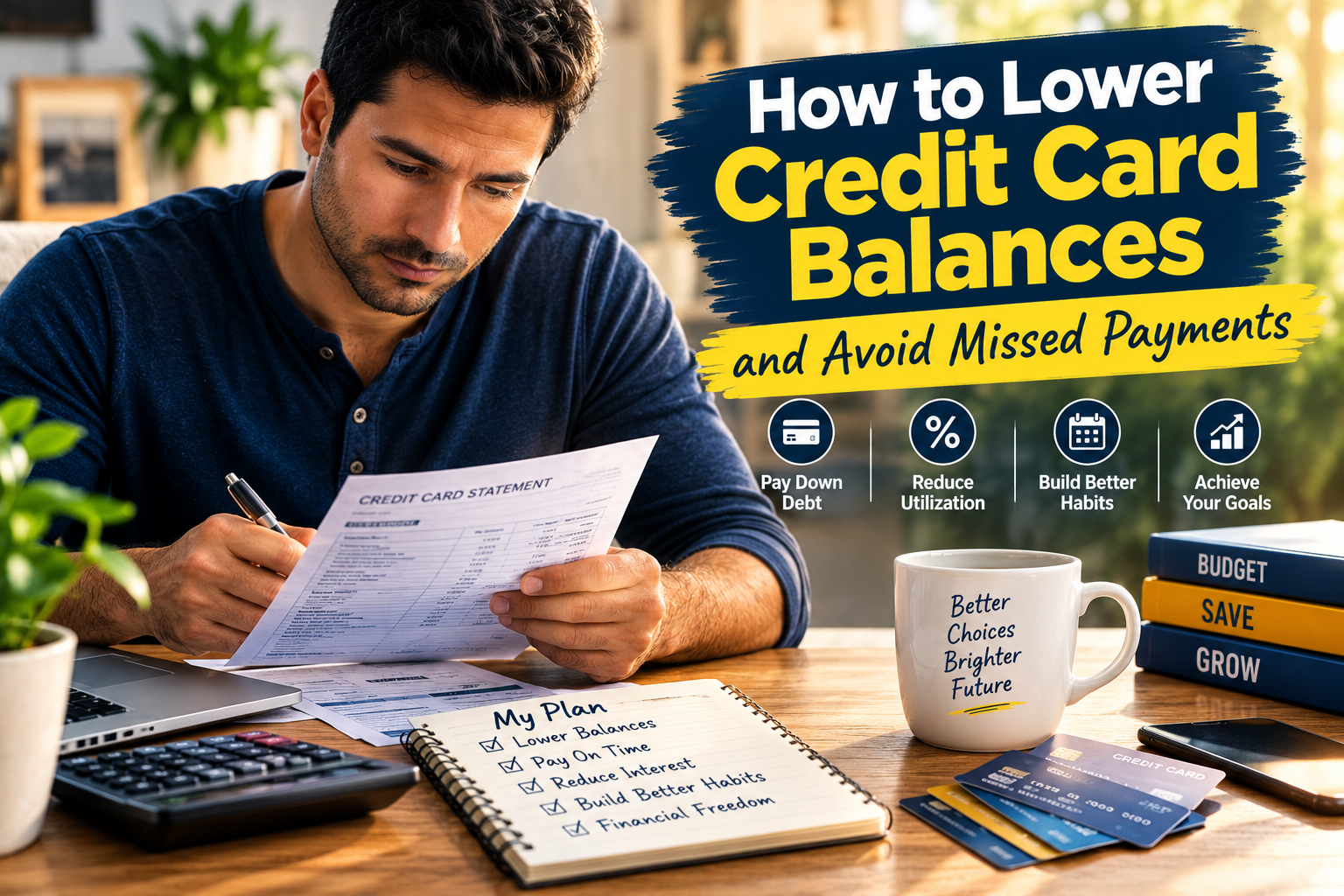
Credit card debt can be difficult to manage, especially when interest charges keep adding up and monthly bills leave you with little money to spare. You may want to pay down your balances and improve your credit, but knowing where to start isn’t always easy.
The good news is that you don’t need a complicated financial plan to begin making progress. A few practical steps can help you reduce your credit card debt, manage your monthly payments, and build better financial habits.
In this guide, you’ll learn how to lower credit card balances, understand credit utilization, choose a debt repayment strategy, and avoid future missed payments.
1. Understand Your Credit Card Balances
Before you start paying down debt, take a close look at your current financial situation.
List each credit card you own, including:
- The outstanding balance.
- The credit limit.
- The interest rate, also called the annual percentage rate (APR).
- The minimum monthly payment.
- The payment due date.
For example, you might have three credit cards with different balances and interest rates. Knowing these details will help you decide which balance to tackle first and how much you can afford to pay each month.
Don’t forget to review your monthly income and essential expenses. Your repayment plan should be realistic enough to follow without leaving you short of money for necessities.
2. Learn How Credit Utilization Works
Credit utilization measures how much of your available revolving credit you’re using. It is an important factor in many credit scoring models.
You can calculate your overall credit utilization by dividing your total credit card balances by your total credit limits and multiplying by 100.
Example:
Suppose you have two credit cards:
- Card A: $800 balance with a $2,000 limit.
- Card B: $700 balance with a $3,000 limit.
Your total balance is $1,500, and your total credit limit is $5,000.
Your overall credit utilization is 30%.
The calculation is:
$1,500 ÷ $5,000 × 100 = 30%
Generally, lower utilization is better for your credit scores. Some experts suggest staying below 30%, while lower utilization may be beneficial. However, 30% is not a magic cutoff, and your credit score depends on other factors too.
You also don’t need to carry a credit card balance or pay interest to build good credit. Paying your statement balance in full when possible can help you avoid interest on purchases when your card’s terms provide a grace period.
You can learn more in the Consumer Financial Protection Bureau’s guide to understanding credit scores.
3. Pay More Than the Minimum When You Can
Your minimum payment helps keep your account in good standing when paid on time, but paying only the minimum can make debt expensive and slow to repay.
When you pay more than the minimum, more money is available to reduce the amount you owe, although interest and payment allocation rules affect how quickly your balance falls.
For example, imagine your credit card balance is $2,000. You make the required minimum payment, but interest and new purchases offset much of the reduction. Your balance may take a long time to pay off.
If your budget allows you to make larger payments and stop adding new charges, you can make more meaningful progress.
Here are a few ways to find extra money for repayment:
- Review subscriptions you no longer use.
- Reduce nonessential spending where practical.
- Plan meals to reduce food waste.
- Compare recurring bills for potential savings.
- Put occasional extra income toward your debt, after accounting for essential needs.
You don’t need to eliminate every small pleasure from your life. The goal is to find an amount you can consistently afford to pay toward your balances.
If you can’t afford more than the minimum right now, keep making the required payment if possible and look for ways to improve your budget over time.
4. Choose a Debt Repayment Strategy
If you have several credit card balances, choosing a repayment strategy can make the process easier to manage.
Two popular approaches are the debt avalanche and debt snowball methods.
The Debt Avalanche Method
With this approach, you make the required minimum payment on every card and direct any extra repayment money toward the card with the highest interest rate.
Once that balance is paid off, you move to the card with the next-highest interest rate.
Why it can help: Paying off high-interest debt first can reduce the total interest you pay, assuming other factors remain similar and you don’t add new debt.
This approach may suit you if minimizing interest costs is your main priority.
The Debt Snowball Method
With the snowball method, you make the required minimum payments on all cards and put extra money toward the card with the smallest balance.
After paying it off, you move to the next-smallest balance.
Why it can help: Eliminating smaller balances can provide a sense of progress and make it easier to stay motivated.
This approach may suit you if quick, visible wins help you stick with your plan.
Which Method Should You Choose?
Neither method is right for everyone. The best approach is one you can maintain while meeting your essential expenses and required payments.
| Strategy | Main focus | Potential advantage |
|---|---|---|
| Debt avalanche | Highest interest rate first | Can reduce interest costs |
| Debt snowball | Smallest balance first | Can provide quicker wins |
Whichever method you choose, continue making at least the required minimum payment on every account by its due date whenever possible.
5. Stop Adding to Your Credit Card Balances
Paying down debt becomes much harder if new purchases keep increasing what you owe.
If you’re struggling with high balances, consider temporarily using cash or a debit card for everyday purchases, provided you can cover those expenses from your available funds.
Before making a purchase, ask yourself whether it fits your budget and whether you’ll be able to pay for it without increasing your debt.
You can also:
- Remove saved credit card details from shopping websites.
- Set a spending limit for nonessential purchases.
- Wait a day before making unplanned purchases.
- Review your transactions each week.
- Avoid using one credit card to cover another card’s payment unless you fully understand the costs and terms of a legitimate balance transfer.
If you need to use credit for essential expenses because your income doesn’t cover them, don’t blame yourself. Focus on understanding the gap between your income and expenses and finding realistic support or adjustments.
The objective is to prevent your debt from growing faster than you can repay it.
6. Set Up Payment Reminders to Avoid Missed Payments
Reducing your balance is important, but protecting your payment history matters too.
A missed payment can result in fees and may hurt your credit history if it becomes delinquent and is reported to the credit bureaus.
Fortunately, a few simple systems can help you remember when bills are due.
Use Calendar Alerts
Add every credit card due date to your phone calendar. Set a reminder several days before the payment is due so you have time to check your bank balance and make the payment.
Consider Automatic Minimum Payments
If you have enough money in your bank account to cover them, automatic minimum payments can help reduce the risk of forgetting a due date.
However, automatic payments aren’t a substitute for checking your finances. Insufficient funds can lead to bank fees or failed payments, so monitor your account regularly.
Align Due Dates With Your Pay Schedule
Ask your card issuer whether you can change a payment due date to better match your payday. This may help you organize your monthly cash flow.
Check Your Statements
Review your statements for the balance, minimum payment, due date, interest charges, and any unexpected fees.
The CFPB’s guide to building and maintaining good credit offers additional guidance on paying bills on time and keeping balances manageable.
7. Create a Monthly Budget You Can Maintain
A workable budget helps you see where your money goes and how much you can put toward debt.
Start with your monthly take-home income. Then subtract essential expenses such as housing, groceries, utilities, transportation, insurance, and necessary healthcare.
Next, account for required debt payments and other obligations.
Whatever remains can be divided among additional debt repayment, savings, and other spending based on your circumstances.
If your expenses already exceed your income, cutting a few small purchases may not be enough. You may need to review larger expenses, explore ways to increase income, contact your creditors, or seek help from a reputable nonprofit credit counselor.
Don’t build a budget around your best month. Build it around what you can reasonably expect to earn and spend.
A realistic plan that you follow consistently is more useful than an ambitious plan that leaves you unable to cover basic needs.
8. Be Careful With Balance Transfers and Debt Consolidation
You may see offers promising to simplify your debt or reduce interest charges. In some situations, a balance transfer or debt consolidation loan can help, but neither is automatically the best choice.
A balance transfer may offer a promotional interest rate for a limited period. However, it may come with a transfer fee, and the regular rate may increase after the promotion ends.
A consolidation loan may combine multiple debts into one payment. But a lower monthly payment doesn’t always mean a lower total cost, especially if you repay the debt over a longer period.
Before choosing either option, compare:
- The interest rate and how long it applies.
- Transfer fees or loan origination fees.
- The monthly payment.
- The total amount you could pay over the life of the debt.
- Whether you can qualify for the advertised terms.
- Whether the new payment fits your budget.
Also consider why the debt accumulated in the first place. If you continue adding new balances after consolidating, you could end up with both the new loan and additional credit card debt.
The CFPB explains the risks and considerations in its guide to credit card debt consolidation.
9. What If You Can’t Afford Your Minimum Payments?
If you’re already struggling to make the required payments, focus on stabilizing your situation before trying to pay off debt aggressively.
Contact your credit card issuer as soon as possible. Explain your financial circumstances and ask whether it offers hardship assistance, a modified payment arrangement, or other options.
Review your essential expenses and determine what you can realistically afford. Avoid promising a payment amount you won’t be able to maintain.
You may also consider contacting a reputable nonprofit credit counseling organization for help reviewing your budget and debt repayment options.
Be cautious of companies that guarantee they can erase your debt or demand fees before providing promised debt relief.
For more guidance, read our related article: What to Do If You’re Behind on Credit Card Payments.
Remember, making progress doesn’t always mean paying down a large amount immediately. Sometimes the first step is preventing additional missed payments and creating a sustainable plan.
10. Track Your Progress Every Month
Debt repayment can take time, so it’s helpful to keep track of your progress.
At the end of each month, record:
- Your balance on each card.
- Your total credit card debt.
- The amount you paid.
- Any interest or fees charged.
- Your current credit utilization.
- Any changes to your payment habits.
Compare the numbers with the previous month.
If your balances are declining, your plan may be working. If they are increasing despite your payments, review the interest charges, new purchases, and budget to understand why.
Your credit score may not improve immediately as your balances fall. Credit scoring models differ, and changes depend on the information reported and other factors in your credit history.
Focus on the habits you can control: paying on time, reducing debt when possible, and avoiding unnecessary borrowing.
Frequently Asked Questions
How can I lower my credit card balances quickly?
Start by avoiding new charges where possible, making required payments on time, and directing any affordable extra money toward a chosen balance. Paying the highest-interest balance first can help reduce interest costs, while paying the smallest balance first may provide quicker wins.
What is a good credit utilization ratio?
Lower utilization is generally better for many credit scoring models. Keeping your balances below 30% of your total credit limits is a common guideline, but it is not a guaranteed threshold for a particular score. Lower utilization may be beneficial, and you do not need to carry a balance to build good credit.
Should I pay off one credit card or spread extra money across all my cards?
Make at least the required minimum payment on every card if possible. Then consider directing extra money toward the highest-interest card to reduce interest costs or the smallest balance to build momentum.
Does paying off a credit card improve my credit score?
It may help, particularly if it reduces your credit utilization. However, the result and timing depend on your overall credit profile, the information reported, and the scoring model used.
Should I close a credit card after paying it off?
Not necessarily. Closing an account can reduce your total available credit and increase your overall utilization if you still have balances on other cards. Consider annual fees, spending habits, account terms, and your broader financial situation before deciding.
What should I do if I can’t afford the minimum payment?
Contact your credit card issuer promptly and ask about hardship assistance or other payment options. Review your budget and consider reputable nonprofit credit counseling if you need help developing a repayment plan.
Final Thoughts: Small Steps Can Lead to Better Financial Habits
Lowering credit card balances takes patience, especially when interest charges and everyday expenses make progress difficult.
Start by understanding your balances and interest rates. Choose a repayment strategy that fits your circumstances, create a realistic budget, and set up reminders to help prevent missed payments.
You don’t have to fix every financial problem at once. Focus on what you can control and adjust your plan when circumstances change.
Most importantly, don’t assume that carrying credit card debt is necessary to build a good credit score. Responsible use, timely payments, and manageable balances are more important than paying interest just to keep a balance on your cards.
Your goal isn’t to make every financial decision perfectly. It’s to build habits that help you move toward greater financial stability, one step at a time.
Disclaimer: This article is for educational purposes only and is not individualized financial advice. Credit scoring models, card terms, interest charges, and repayment outcomes vary. Review your account agreements and consult a qualified professional if you need advice for your specific circumstances.