You open the app “just for a minute.” Forty-five minutes later, you put your phone down feeling worse than when you picked it up — a little more anxious, a little less confident, a little more aware of everything you’re supposedly falling behind on. If that sounds familiar, you’re not imagining it, and you’re definitely not alone.
Social media was supposed to bring us closer together. In many ways it has. But for millions of people, it has also become a quiet source of comparison, self-doubt, and anxiety — especially in social situations. The good news is that once you understand how social media feeds anxiety, you can take specific, practical steps to loosen its grip and build real confidence again.
The Connection Between Social Media and Social Anxiety
Social anxiety, at its core, is the fear of being judged, embarrassed, or rejected by others. Social media doesn’t create that fear out of nothing — but it does something worse: it amplifies it, repeats it, and keeps it in front of you nearly around the clock.
Here’s the uncomfortable truth: platforms are designed to hold your attention, not to protect your mental health. The features that make social media so engaging — endless scrolling, curated highlight reels, public likes and comments — are often the exact same features that fuel comparison, self-consciousness, and fear of judgment.
Let’s break down exactly how this happens.
5 Ways Social Media Fuels Social Anxiety
1. Constant Social Comparison
Every scroll puts you face-to-face with someone else’s vacation, promotion, relationship, or body — almost always their best moment, filtered and curated. Your brain doesn’t automatically register that this is a highlight reel; it just registers “everyone else is doing better than me.” Over time, this steady stream of comparison chips away at self-esteem and heightens the fear that you don’t measure up in real social situations too.
2. The Illusion of Constant Judgment
Every post is, in a sense, a small public performance — one that can be liked, commented on, or ignored. This turns ordinary moments of your life into things that get evaluated. For someone prone to social anxiety, this can train the brain to feel like it’s always being watched and judged, even offline.
3. Fear of Missing Out (FOMO)
Seeing friends together without you, a party you weren’t invited to, or an event you missed can trigger real emotional pain — the brain processes social exclusion similarly to physical pain. Repeated exposure to these moments, even small ones, reinforces the belief that you’re on the outside looking in.
4. Reduced Real-World Practice
Ironically, the more time we spend interacting through screens, the less practice we get at reading tone of voice, facial expressions, and body language in real time. Social skills are like muscles — they need real use to stay strong. When digital interaction replaces face-to-face conversation, in-person interactions can start to feel more intimidating simply from lack of practice.
5. Validation-Seeking Behavior
Likes, comments, and follower counts can start to feel like a scoreboard for self-worth. When a post doesn’t perform the way you hoped, it’s easy to internalize that as personal rejection, rather than what it actually is — an algorithm and a scroll-happy audience with a two-second attention span.
Why This Matters for Your Wellbeing
None of this means social media is inherently “bad” — it’s a tool, and tools can be used wisely or poorly. But left unchecked, this cycle of comparison, judgment, and validation-seeking can spill into your everyday life: making you more hesitant to speak up in a meeting, more anxious at a party, more likely to cancel plans, or more critical of yourself in the mirror.
Recognizing the pattern is the first step. Changing your relationship with these platforms — not necessarily abandoning them — is the path forward.
What You Can Do About It: Practical, Positive Steps
You don’t need to delete every app or disappear from the internet to protect your mental health. You need intentional boundaries and habits that put you back in control. Here’s where to start.
1. Audit Who You Follow
Take ten minutes and scroll through your following list with one question in mind: does this account make me feel inspired, or does it make me feel inadequate? Unfollow or mute anything that consistently triggers comparison or self-doubt. Curate your feed the way you’d curate a room full of people — surround yourself with accounts that uplift you.
Try this today: Unfollow or mute five accounts that leave you feeling worse after viewing them.
2. Set Specific Time Boundaries
Open-ended scrolling is where anxiety tends to creep in the most. Instead, set specific windows for checking social media — for example, 15 minutes in the morning and 15 minutes in the evening — rather than letting it fill every idle moment of your day. Most phones now have built-in screen time tools that can help enforce this automatically.
Try this today: Set a daily app time limit on your phone, even if it’s just a starting point you plan to adjust.
3. Practice the “Highlight Reel” Reminder
Before you start scrolling, remind yourself: I’m about to see everyone’s highlight reel, not their whole story. This simple mental reframe, practiced consistently, weakens the automatic comparison response over time. No one posts their argument with their partner, their bad day at work, or their quiet moments of self-doubt.
4. Rebuild Real-World Social Practice
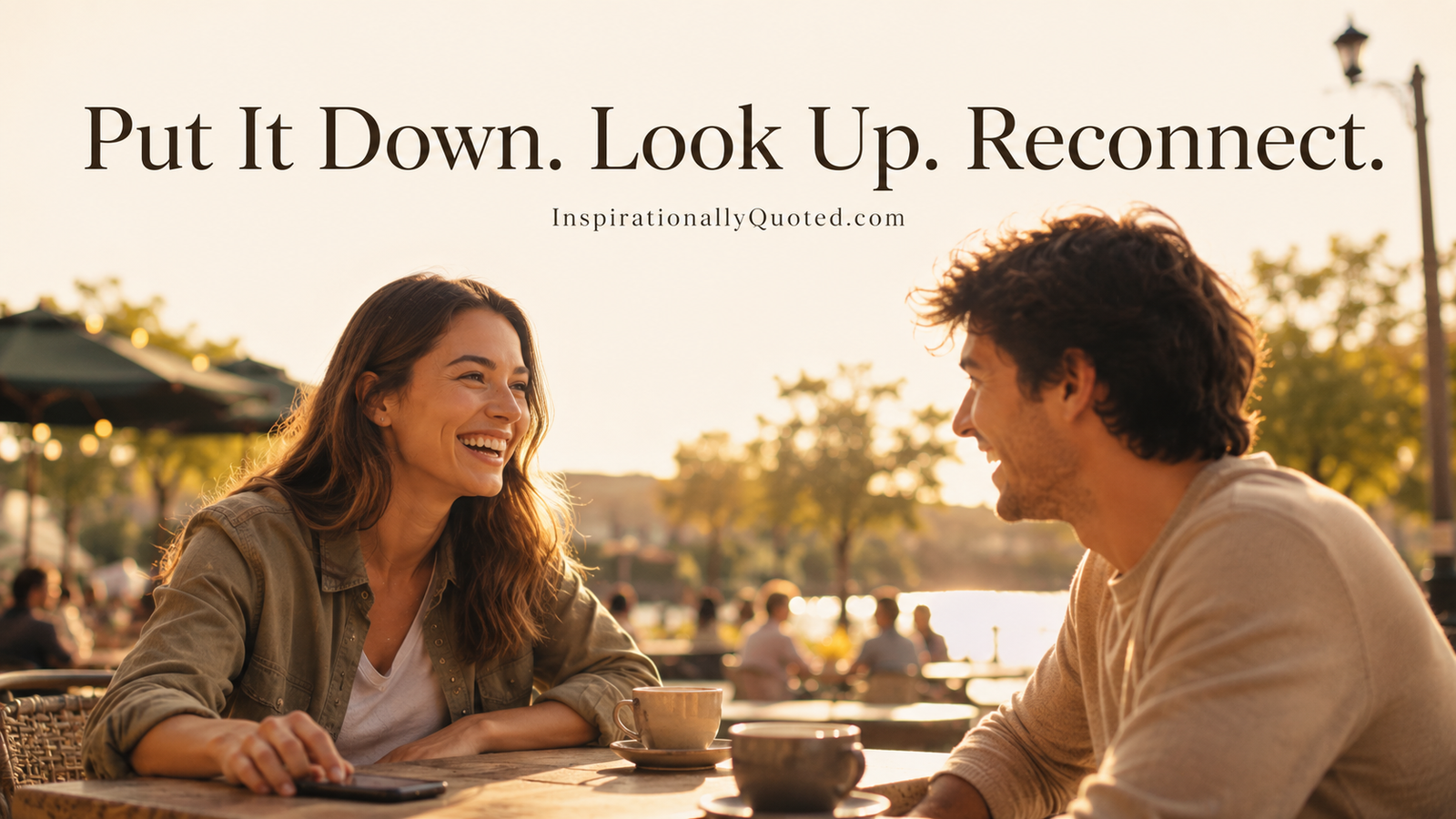
Since social skills need real use to stay sharp, intentionally create small opportunities for face-to-face or voice-to-voice interaction. A phone call instead of a text. A coffee instead of a comment thread. Even brief in-person interactions — chatting with a cashier, a neighbor, a coworker — help retrain your brain that real-time social interaction is safe and manageable.
Try this today: Replace one text conversation this week with a phone call.
5. Detach Your Self-Worth From Metrics
Likes and follower counts are not a measure of your value, talent, or worth as a person — they’re a reflection of an algorithm’s mood on any given day. Try posting (if you post at all) without checking back repeatedly for engagement. Notice how much mental space that frees up.
6. Schedule Regular “Screen-Free” Blocks
Set aside intentional periods — during meals, the first hour after waking, or the hour before bed — where your phone stays out of reach entirely. These small pockets of disconnection give your nervous system a chance to reset and reduce the constant low-grade stimulation that fuels anxiety.
Try this today: Choose one screen-free block to start with — even just 30 minutes — and stick to it for a week.
7. Practice Exposure in Small, Real Steps
If social media has made in-person interaction feel intimidating, ease back in gradually rather than all at once. Start with brief, low-stakes interactions — a short chat with a familiar face — and build up to longer or more unfamiliar social settings. Confidence is built through repeated small wins, not a single leap.
8. Talk About It Honestly
You might be surprised how many people around you feel exactly the same way about social media and anxiety. Talking openly with a friend, partner, or therapist about what you’re noticing can be both relieving and clarifying — and often leads to practical support, like accountability for cutting back or simply feeling less alone in the struggle.
9. Consider a Reset Period
If your relationship with social media feels particularly heavy right now, consider a short, defined break — a week, or even 48 hours — completely off the apps that affect you most. Many people find that even a brief reset creates noticeable clarity and a natural, healthier baseline to return to.
A Word on Comparing Your “Behind the Scenes” to Someone Else’s “Highlight Reel”
One of the most quietly damaging habits social media encourages is comparing the parts of your life you know intimately — the doubts, the bad days, the unfiltered moments — to the polished, selective version of someone else’s life that they’ve chosen to share. It’s an unfair comparison by design, yet it’s one nearly everyone falls into without realizing it.
The next time you notice that familiar pang of “why isn’t my life like that,” pause and remind yourself: you’re comparing your full, complicated reality to someone else’s carefully chosen ten seconds. It isn’t a fair fight, and it was never meant to be one. Naming this pattern out loud — even just to yourself — takes away much of its power.
Helping Kids and Teens Navigate This, Too
If you’re a parent, this cycle is worth understanding not just for yourself but for the younger people in your life, who are often even more vulnerable to comparison and social judgment during formative years. A few starting points:
- Model healthy habits yourself. Kids notice how often the adults around them check their phones, and they absorb those habits as normal.
- Keep communication open. Ask open, curious questions about what they see online, rather than reacting with alarm, so they feel comfortable coming to you when something upsets them.
- Encourage offline hobbies and friendships. The more fulfillment a young person finds offline, the less power any single app has over their self-esteem.
Small, steady guidance here can make a meaningful difference in how the next generation relates to these platforms.
Building a Healthier Relationship With Social Media Long-Term
Like most meaningful change, this isn’t about one dramatic overhaul — it’s about small, consistent adjustments that compound over time. A useful way to think about it:
- Daily: Set time boundaries and use the “highlight reel” reminder before you scroll.
- Weekly: Replace at least one digital interaction with a real-world one — a call, a coffee, a walk with a friend.
- Monthly: Audit who you follow and reassess how your feed makes you feel.
Small, sustained changes like these retrain both your habits and your nervous system — gradually replacing anxious, comparison-driven scrolling with a more grounded, confident relationship with both technology and other people.
Frequently Asked Questions About Social Media and Social Anxiety
Can social media actually cause social anxiety, or just worsen it? Research suggests it’s usually more of an amplifier than a root cause — heavy or comparison-driven use tends to intensify existing anxious tendencies rather than create social anxiety from nothing. That said, for some people, especially younger users, heavy early use can shape how comfortable they become with in-person interaction over time.
Is quitting social media entirely the solution? Not necessarily. Many people benefit more from intentional, bounded use than from complete abstinence, since these platforms also offer real connection and community when used mindfully. The goal is a healthier relationship with the tool, not necessarily eliminating it.
How do I know if my social media use is affecting my mental health? Common signs include feeling anxious or low after scrolling, comparing yourself frequently to others online, checking apps compulsively, or feeling more nervous in real-life social situations than you used to. If these patterns feel persistent, it may be worth talking to a therapist.
What’s the fastest way to feel calmer around social media? Setting a simple time limit and unfollowing accounts that trigger comparison tend to produce noticeable relief within just a few days for most people.
A Simple Truth Worth Remembering
Social media isn’t going anywhere, and it isn’t inherently your enemy — but it does need boundaries, the same way any powerful tool does. The goal isn’t to disappear from the digital world; it’s to make sure that world reflects your real life back to you accurately, instead of a curated, anxiety-inducing highlight reel that was never the full picture to begin with.
You are not behind. You are not less than. You are not being judged nearly as much as your mind, fed by an endless scroll, wants you to believe. Step back, breathe, and remember: real connection — the kind that actually nourishes you — has always happened in real time, with real people, one honest conversation at a time.